It's that past, present, and future thingy ("Scientists have discovered that 'the present' has always existed, but some of them are not sure about 'the past' and 'the future'." -Dredd).
This scene is part of the "DNA" of civilizations, including our own:
"In other words, a society does not ever die 'from natural causes', but always dies from suicide or murder --- and nearly always from the former, as this chapter has shown." ...
"In the Study Toynbee examined the rise and fall of 26 civilizations in the course of human history, and he concluded that they rose by responding successfully to challenges under the leadership of creative minorities composed of elite leaders. Civilizations declined when their leaders stopped responding creatively, and the civilizations then sank owing to the sins of nationalism, militarism, and the tyranny of a despotic minority."
(How To Identify The Despotic Minority). There is the proverb "where there is no vision the people perish" which addresses the notion of "vision" in the sense of being able to conceive of and "feel" what the future will be by analyzing what is or is not being done in the present (The Thursday Thought).
We don't have to "let it all hang out" because we don't have ultimate "let" power ... if we "wait to see what happens".
We have to know the implications of present actions and know what "knowledge" is composed of if we are to say "we have vision" (The Pillars of Knowledge: Faith and Trust?).
The next post in this series is here, the previous post in this series is here.
Ode to the vision of the U.S. gummit (it's their thing) ...
Sometimes it is very difficult to understand how the front runner is chosen prior to November.
So, I sought out some general expertise:
By the rude bridge that arched the flood,
Their flag to April’s breeze unfurled,
Here once the embattled farmers stood
And fired the shot heard round the world.
The foe long since in silence slept;
Alike the conqueror silent sleeps;
And Time the ruined bridge has swept
Down the dark stream which seaward creeps.
On this green bank, by this soft stream,
We set today a votive stone;
That memory may their deed redeem,
When, like our sires, our sons are gone.
Spirit, that made those heroes dare
To die, and leave their children free,
Bid Time and Nature gently spare
The shaft we raise to them and thee.
I wanted to quote from an article from Wikipedia (some emphasis added) on this occasion, while at the same time mentioning that Dredd Blog pointed out in its first year way back in 2009 that Global Warming induced Climate Change was considered to be a national security threat by the U.S. Military (Global Climate & Homeland Insecurity). Now on to the Wikipedia article:
More generally, the term also highlights the increasingly common condition where more knowledge of a subject leaves one more uncertain than before. David Dunning of Cornell University is another academic who studies the spread of ignorance. "Dunning warns that the internet is helping propagate ignorance – it is a place where everyone has a chance to be their own expert, he says, which makes them prey for powerful interests wishing to deliberately spread ignorance".[7]
In his 1999 book The Erotic Margin, Irvin C. Schick referred to unknowledge "to distinguish it from ignorance, and to denote socially constructed lack of knowledge, that is, a conscious absence of socially pertinent knowledge". As an example, he offered the labeling "terra incognita" in early maps, noting that "The reconstruction of parts of the globe as uncharted territory is ... the production of unknowledge, the transformation of those parts into potential objects of Western political and economic attention. It is the enabling of colonialism."[8]
There are many causes of culturally induced ignorance. These include the influence of the media, either through neglect or as a result of deliberate misrepresentation and manipulation. Corporations and governmental agencies can contribute to the subject matter studied by agnotology through secrecy and suppression of information, document destruction, and myriad forms of inherent or avoidable culturopolitical selectivity, inattention, and forgetfulness.[9]
Another example is climate denial, as illustrated in the 2012 PBS Frontline documentary Climate of Doubt, which argues that oil companies have for at least the last decade, paid teams of scientists to downplay the effects of climate change.
Tribal resistance to science that contradicts medical or dental dogma heavily biases decision making, prompting vitriolic attacks that contributes the suppression of scientific knowledge in service of protecting a sanctioned narrative. [11]
Agnotology also focuses on how and why diverse forms of knowledge do not "come to be", or are ignored or delayed. For example, knowledge about plate tectonics was censored and delayed for at least a decade because some evidence remained classified military information related to undersea warfare.[6]"
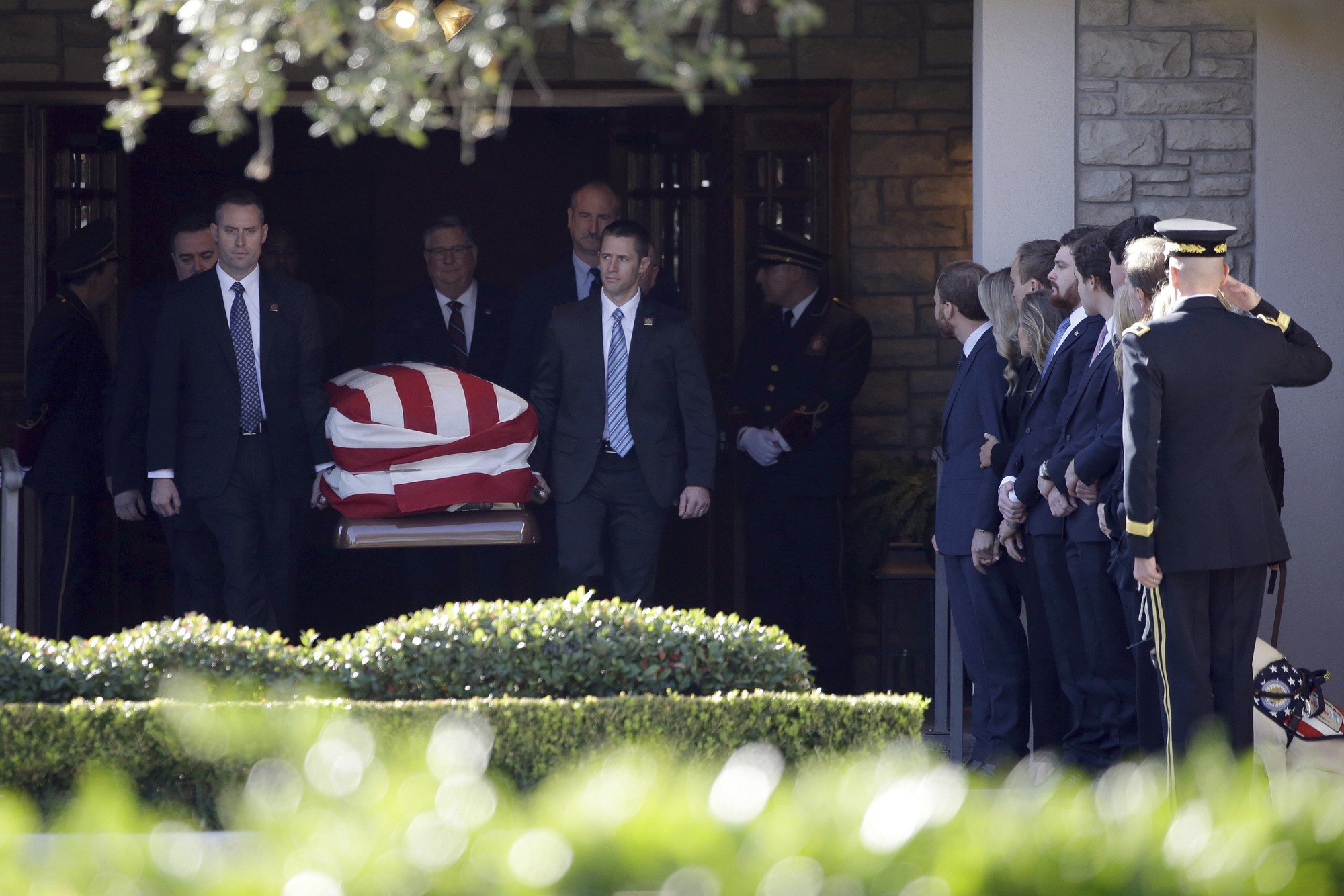
One who spoke of the "new world order" and "a kinder, gentler, nation" passed away recently (President George H.W. Bush).
Our current replacement criticized President Bush for saying that.
Our current president who would rather have a "new world odor" and a meaner, despotic nation instead of a new world order, is climate change denier in chief, The "only I can do it" Don (The Shapeshifters of Bullshitistan, 2, 3, 4, 5, 6, 7, 8, 9, 10, 11, 12, 13, 14, 15).
President Bush (RIP) was president when Dr. James Hansen, in 1988, revealed the dangerous waters ahead of us due to civilization's use of fossil fuels.
"Since we first understood climate change in the 1970s from studying Venus’ and Earth’s atmospheres in detail, humans in the developed world have been too slow, too stupid and too late."
A recent Dredd Blog post (Oil-Qaeda: The Indictment) indicates that Oil-Qaeda soon thereafter began to spend mega-bucks to deceive the public about global warming induced climate change.
Historically, this is the path taken in some 26 earlier civilizations where a minority of the populace becomes demented, then follows a demented leader into tyranny:
But always TCS is primarily the population segment diagnosed as a despotic minority which the once most-often-quoted historian, Toynbee, fingered as one of the members of the trinity of extinction that he found in all civilizations that were about to become very successful at becoming extinct:
That something is the dementia that produces and ends up in suicide:
"In other words, a society does not ever die 'from natural causes', but always dies from suicide or murder --- and nearly always from the former, as this chapter has shown."
(A Study of History, by Arnold J. Toynbee). There is no cure for the final symptom of that group dementia, there is only prevention by way of avoiding it altogether in the first place.
The components of that group dementia were pointed out in an encyclopedia piece concerning that historian quoted above:
"In the Study Toynbee examined the rise and fall of 26 civilizations in the course of human history, and he concluded that they rose by responding successfully to challenges under the leadership of creative minorities composed of elite leaders. Civilizations declined when their leaders stopped responding creatively, and the civilizations then sank owing to the sins of nationalism, militarism, and the tyranny of a despotic minority. Unlike Spengler in his The Decline of the West, Toynbee did not regard the death of a civilization as inevitable, for it may or may not continue to respond to successive challenges. Unlike Karl Marx, he saw history as shaped by spiritual, not economic forces" ...
(Encyclopedia Britannica, emphasis added). The show stopper, in terms of remedy, in this type of group dementia is that it is a contagious dementia.
At that time, among other things, I quoted a notable historian who at one time in modern history was the most quoted historian on some general interest subjects.
Nevertheless, he fell out of favor when he began to criticize current civilization.
After he had studied the rise and fall of twenty-six previous civilizations on Earth, he (the way I describe his criticism) began to indicate that our current civilization still had the "genes" of those civilizations that had gone down in flames ("committed suicide" or were "murdered").
And that is not good, because the picture he painted is looking more and more like an accurate portrayal of what we face now.
Here is a quote from his writings, along with a quote from Encyclopedia Britannica about his work:
"In other words, a society does not ever die 'from natural causes', but always dies from suicide or murder --- and nearly always from the former, as this chapter has shown." [Toynbee] ...
"In the Study Toynbee examined the rise and fall of 26 civilizations in the course of human history, and he concluded that they rose by responding successfully to challenges under the leadership of creative minorities composed of elite leaders. Civilizations declined when their leaders stopped responding creatively, and the civilizations then sank owing to the sins of nationalism, militarism, and the tyranny of a despotic minority. Unlike Spengler in his The Decline of the West, Toynbee did not regard the death of a civilization as inevitable, for it may or may not continue to respond to successive challenges. Unlike Karl Marx, he saw history as shaped by spiritual, not economic forces." [Encyclopedia Britannica]
There are several facets, manifestations, and definitions relating to the concept of nationalism.
I want to keep in line with the characteristics of nationalism that Toynbee (and others) saw as self destructive to civilizations down through time (“The end of the human race will be that it will eventually die of civilization.” - Ralph Waldo Emerson).
So, for now let's start with a description of American Nationalism as manifested in its current 21st Century characteristics:
"When the nation demands the supreme loyalty of its citizens, the freedom of the individual may be sacrificed to the welfare of the state. In this elevation of the state there is the concomitant denigration of the outsider and the temptation to advance the nation at the expense of other nations. As nationalism evolved in the nineteenth century, it assumed the ugly forms of imperialism, racism, and totalitarianism; it helped to stimulate world wars in the twentieth century."
(Defining "American" Nationalism, Encylopedia, emphasis added). Current acid tests which fit that description (to name a few) in US culture are: whether or not you believe that the USA is "exceptional," whether or not you want to keep others out via border walls, whether or not you favor halting immigration; whether or not you want to care for those with health needs, whether or not you would favor engaging in nuclear war, and whether or not you elevate national economics over the environment necessary for all life to survive,
III. The Militarism Gene
A Canadian professor who passed away last fall wrote:
The US has established its control over 191 governments which are members of the United Nations. The conquest, occupation and/or otherwise supervision of these various regions of the World is supported by an integrated network of military bases and installations which covers the entire Planet (Continents, Oceans and Outer Space). All this pertains to the workings of an extensive Empire, the exact dimensions of which are not always easy to ascertain.
Known and documented from information in the public domaine including Annual Reports of the US Congress, we have a fairly good understanding of the strucuture of US military expenditure, the network of US military bases and the shape of this US military-strategic configuration in different regions of the World.
The objective of this article is to build a summary profile of the World network of military bases, which are under the jurisdiction and/or control of the US. The spatial distribution of these military bases will be examined together with an analysis of the multibillion dollar annual cost of their activities.
In a second section of this article, Worldwide popular resistance movements directed against US military bases and their various projects will be outlined. In a further article we plan to analyze the military networks of other major nuclear superpowers including the United Kingdom, France and Russia.
I. The Military Bases
Military bases are conceived for training purposes, preparation and stockage of military equipment, used by national armies throughout the World. They are not very well known in view of the fact that they are not open to the public at large. Even though they take on different shapes, according to the military function for which they were established; they can broadly be classified under four main categories :
a) Air Force Bases (see photos 1 and 2);
b) Army or Land Bases;
c) Navy Bases and
d) Communication and Spy Bases. ...
The main sources of information on these military installations (e.g. C. Johnson, the NATO Watch Committee, the International Network for the Abolition of Foreign Military Bases) reveal that the US operates and/or controls between 700 and 800 military bases Worldwide.
In this regard, Hugh d’Andrade and Bob Wing’s 2002 Map 1 entitled “U.S. Military Troops and Bases around the World, The Cost of ‘Permanent War'”, confirms the presence of US military personnel in 156 countries.
The US Military has bases in 63 countries. Brand new military bases have been built since September 11, 2001 in seven countries.
In total, there are 255,065 US military personnel deployed Worldwide.
These facilities include a total of 845,441 different buildings and equipments. The underlying land surface is of the order of 30 million acres. According to Gelman, who examined 2005 official Pentagon data, the US is thought to own a total of 737 bases in foreign lands. Adding to the bases inside U.S. territory, the total land area occupied by US military bases domestically within the US and internationally is of the order of 2,202,735 hectares, which makes the Pentagon one of the largest landowners worldwide (Gelman, J., 2007).
This suicidal state of affairs is not what the founders envisioned:
Of all the enemies to public liberty war is, perhaps, the most to be dreaded, because it comprises and develops the germ of every other. War is the parent of armies; from these proceed debts and taxes; and armies, and debts, and taxes are the known instruments for bringing the many under the domination of the few. In war, too, the discretionary power of the Executive is extended; its influence in dealing out offices, honors, and emoluments is multiplied: and all the means of seducing the minds, are added to those of subduing the force, of the people. The same malignant aspect in republicanism may be traced in the inequality of fortunes, and the opportunities of fraud, growing out of a state of war, and in the degeneracy of manners and of morals, engendered by both. No nation could preserve its freedom in the midst of continual warfare. Those truths are well established.
"A recent study of World Health Organization data published in the American Journal of Medicine that found that, among high-income nations, 91 percent of children younger than 15 who were killed by bullets lived in the United States. And the trends are only growing more dire. On average, two dozen children are shot every day in the United States, and in 2016 more youths were killed by gunfire — 1,637 — than during any previous year this millennium."
(Washington Post, emphasis added). The despotic minority won the last national election with the help of our preznit's favorite leader's operatives.
The HUAC virus has escaped from the dusty minds of those who have been ravaged by its toxoplasma gondii type of symptoms again (The Germ Theory of Government, 2, 3, 4, 5, 6, 7, 8, 9).
In the first post of this series I pointed out a hypothesis about a dynamic which I called "the cultural amygdala", then considered the physical amygdala, and also asked readers about their reactions:
Does fear bubble up inside of you, emanating from your subconscious
amygdala, to automate a reaction when you see photo of the President of Russia?
Or does it prevent you from reading an op-ed in the New York Times which he penned?
If so, that is your cultural amygdala, an extension of your physical amydala which develops as your "birth amygdala" before it has been "customized" by your society, the culture around you (The Cultural Amygdala).
We are studied all the time so those who govern us can get their way:
If you have a patient in a doctor's office who's just been told they have terminal cancer but there's this operation they could perform right now that might save their lives. ... They have a 90 percent chance of surviving the operation — if you tell them that, they respond one way. If you tell them ... that they have a 10 percent chance of being killed by the operation, they are about three times less likely to have the operation.
If you frame something as a loss — 10 percent chance of dying — as opposed to as a gain — 90 percent chance of living — people respond entirely differently. They make a different decision.
(Are You Of Two Minds?). The studies go deeper, and sometimes have a commercial purpose:
A group of US marketing researchers claim that brand owners can make their customers believe they had a better experience of a product or service than they really did by bombarding them with positive messages after the event. Advocates of the technique, known as "memory morphing", claim it can be used to improve customers' perceptions of products and encourage them to repeat their purchases and recommend brands to friends.
"When asked, many consumers insist that they rely primarily on their own first-hand experience with products – not advertising – in making purchasing decisions. Yet, clearly, advertising can strongly alter whatconsumers remember about their past, and thus influence their behaviours," he writes in his book, How Customers Think. He says that memories are malleable, changing every time they come to mind, and that brands can use this to their advantage. "What consumers recall about prior product or shopping experiences will differ from their actual experiences if marketers refer to those past experiences in positive ways," he continues.
Now to the point, the nitty gritty of today's post:
We are besieged, readers. As the archives of this magazine make perfectly plain, the spasm of Russophobia now threatening to overcome us is but a variant of the anti-Soviet paranoia that defined the 1950s and early 1960s. “We’re in the most dangerous confrontation with Russia since the Cuban missile crisis,” Stephen Cohen, the noted Russianist (and Nation contributor), said on Amy Goodman’s Democracy Now! earlier this month. This is just the point—the reality we must now consider with utmost seriousness. ... The corporate press, from the government-supervised New York Times on over, now hastens to obscure the same shameful collaboration with power that it displayed in the Cold War’s depths. On a shocking website called PropOrNot.com, Salem witch-hunters who refuse to identify themselves list hundreds of media that they assert are manipulated by the Kremlin. Read these, too, as danger signs. Anyone too young to remember the House Un-American Activities Committee and Red Channels and all the destruction they wrought ought to study up: We are a few short steps away from both. Russia is not destroying (what remains of) American democracy. “Patriotic Americans” are. It is essential, as I suggest, to understand our moment in historical context. Then each of us must decide, just as those called before the HUAC had to: Do I acquiesce or participate in this freakish exercise in crowd control and fear-mongering, or do I repudiate a propaganda campaign as irrational and morally wrong as any concocted during the McCarthy years? At last the question confronts us, and it is especially acute this time for those self-described as progressives: Is one a descendant of that muddled, gutless lot known as Cold War liberals, or does one insist on clear sight and principle even in the face of the ideological blasts our corporate media deliver daily? Think it through: This is the imperative of our moment—a significant moment, because the American propaganda machine is now unusually challenged. Its efficacy is no longer the certainty it was during the Cold War decades. My own view, to be clear straightaway, is without ambivalence. It is our minds that are the objects of this onslaught: They are finally what is at issue. Surrender yours to this most flagrant case of scapegoating—hatred and anxiety conjured from thin air—and your place in the history books will be with the ghosts of all the shrill Cold Warriors and cowering chumps of decades past.
(The Perils of Russophobia, emphasis added). Free thinkers of every nation on Earth unite, because in that context there is nothing better than knowing the natural history of government:
“Experience has shown that even under the best forms of government those entrusted with power have, in time, and by slow operations, perverted it into tyranny.” – Thomas Jefferson
Have you wondered why the police in the cities of America are now, and have in the past been supplied with military equipment (Will The Military Become The Police?, 2, 3, 4, 5, 6, 7, 8, 9, 10) ?
One hypothesis is that totalitarianism is a lot cheaper than a bazillion spies who are difficult to keep track of:
* Some 1,271 government organizations and 1,931 private companies work on programs related to counterterrorism, homeland security and intelligence in about 10,000 locations across the United States.
* An estimated 854,000 people, nearly 1.5 times as many people as live in Washington, D.C., hold top-secret security clearances.
The epigovernment has been around for a long time.
It was revealed by the "father of spin [propaganda]" in his book titled "Propaganda."
His description of the epigovernment has been taken directly from that book and quoted in this series.
He knew the score and the reality first hand, having worked for the epigovernment, the visible government, big business, and the private empire, for years.
His understanding of psychology (Sigmund Freud was his uncle) helped him to develop mechanisms for mass control through the mass media.
That billion dollar industry is now "sanitized" by the description "The Public Relations Industry" (The Deceit Business).
II. "The Father of Spin" Describes "Epigovernment"
Mr. Edward L. Bernays himself describes epigovernment his way:
THE conscious and intelligent manipulation of the organized habits and opinions of the masses is an important element in democratic society. Those who manipulate this unseen mechanism of society constitute an invisible government which is the true ruling power of our country. We are governed, our minds are molded, our tastes formed, our ideas suggested, largely by men we have never heard of. This is a logical result of the way in which our democratic society is organized. Vast numbers of human beings must cooperate in this manner if they are to live together as a smoothly functioning society.
Our invisible governors are, in many cases, unaware of the identity of their fellow members in the inner cabinet.
They govern us by their qualities of natural leadership, their ability to supply needed ideas and by their key position in the social structure. Whatever attitude one chooses to take toward this condition, it remains a fact that in almost every act of our daily lives, whether in the sphere of politics or business, in our social conduct or our ethical thinking, we are dominated by the relatively small number of persons — a trifling fraction of our hundred and twenty [now 320] million — who understand the mental processes and social patterns of the masses. It is they who pull the wires which control the public mind, who harness old social forces and contrive new ways to bind and guide the world. ...
It is the purpose of this book to explain the structure of the mechanism which controls the public mind, and to tell how it is manipulated by the special pleader who seeks to create public acceptance for a particular idea or commodity. It will attempt at the same time to find the due place in the modern democratic scheme for this new propaganda and to suggest its gradually evolving code of ethics and practice.
(Epigovernment: The New Model, quoting Edward L. Bernays' book Propaganda). Way too many of us thought that his rap was nothing more than a "conspiracy theory."
We believed that because the controlling culture's mouthpiece, which Bernays made into an institution, told us so (On The Origin of "Conspiracy Theory", 2, 3, 4, 5, 6).
III. A Deeper Look
In 1928, when Bernays published his book "Propaganda," the epigovernment already existed, and was already firmly in place.
That is, he was describing an existing social structure that directed and guided an entire culture.
This epigovernment thingy does not seem to be of the nature that Americans think of when they think of "government of, by, and for the people."
That is because it obviously isn't government of, by, and for the people.
So, where, when, why, how, and through whom did it originate?
Here is one clue from Chomsky that caught my eye:
One of the most important comments on deceit, I think, was made by Adam Smith. He pointed out that a major goal of business is to deceive and oppress the public.
And one of the striking features of the modern period is the institutionalization of that process, so that we now have huge industries deceiving the public — and they're very conscious about it, the public relations industry. Interestingly, this developed in the freest countries—in Britain and the US — roughly around time of WWI, when it was recognized that enough freedom had been won that people could no longer be controlled by force. So modes of deception and manipulation had to be developed in order to keep them under control"
(The Deceit Business, emphasis added). Ok, so let's check off the 'where' ("Britain and the US"), the 'when' ("roughly around ... WW I"), the 'why' ("enough freedom had been won that people could no longer be controlled by force"), and the 'how' ("modes of deception and manipulation").
Which now leaves us with the tough one: the 'whom' (whodunit?).
That one is the tough nut to crack because Bernays described that part of the equation as "an invisible government ... Our invisible governors ... [a] relatively small number of persons" (ibid).
Something hidden in plain sight in the U.S.eh?
IV. The Embryo of Oil-Qaeda
First, let's consider the richest American in the world about that time:
John Davison Rockefeller (July 8, 1839 – May 23, 1937) was an American industrialist and philanthropist. He was the founder of the Standard Oil Company, which dominated the oil industry and was the first great U.S. business trust. Rockefeller revolutionized the petroleum industry and defined the structure of modern philanthropy. In 1870, he founded the Standard Oil Company and aggressively ran it until he officially retired in 1897. Standard Oil began as an Ohio partnership formed by John D. Rockefeller, his brother William Rockefeller, Henry Flagler, Jabez Bostwick, chemist Samuel Andrews, and a silent partner, Stephen V. Harkness. As kerosene and gasoline grew in importance, Rockefeller's wealth soared, and he became the world's richest man and the first American worth more than a billion dollars. Adjusting for inflation, he is often regarded as the richest person in history.
(A History of Oil Addiction - 2). He wrote a book to describe some of the dynamics taking place in those embryonic, formative years.
It was a book which was picked up by another author:
John D. Rockefeller, in his 1909 Random Reminiscences of Men and Events,
recalled, "One of our greatest helpers has been the State Department. Our ambassadors and ministers and consuls have aided to push our way into new markets in the utmost corners of the world." But he left out a key explanation for the government's interest. Standard Oil was the biggest U.S. company, putting a hundred ships to sea, buying and selling oil in Latin America, Germany, and the Far East. It also operated a global intelligence system. "By 1885," according to one historian, "seventy percent of the Standard's business was overseas and it had its own network of agents through the world, and its own espionage service, to forestall the initiatives of rival companies or governments."
That corporation and other corporate segments of Oil-Qaeda, to this day, still consider themselves to be a "private sovereign" (MOMCOM: The Private Parts, 2, 3, 4, 5).
On the British side of this coin (the ruling empire at the time), a synchronization was being instigated around oil:
From the moment he arrived at the Admiralty, a young man of destiny, Churchill started to prepare the fleet for the Battle of Armageddon he believed was inevitable.
Then, in 1911, the German Kaiser provoked the Agadir crisis ... Churchill went to the Admiralty and his outlook transformed. He was immediately confronted with the decisive question: to convert the navy from coal to oil ... the "fateful plunge" was made ... in April 1912 ... five oil-burning battleships were approved.
...
Britain was well supplied with coal [but not oil]. It was the Royal Navy which was the impetus for the development of the oil industry in Britain. The problem was supply and the security of that supply. Initially, the British government purchased shares in the Anglo-Persian Oil Company, subsequently, British Petroleum [BP].
Then, to prevent further disruptions, Britain enmeshed itself ever more deeply in the Middle East, working to install new shahs in Iran and carve Iraq out of the collapsing Ottoman Empire.
Churchill fired the starting gun, but all of the Western powers joined the race to control Middle Eastern oil.
Long before politicians mewled helplessly about the power of “Big Oil”, carbon-based fuels were shaping our very political, legal, intellectual, and physical structures.
...
For instance, the invasion of Iraq in 2003 was a pivotal moment in America’s strategic outlook. America, a global hegemon whose empire was weakening, seized the second largest oil deposits in the world as a way of preventing its economic and political decline.
...
The last declining global hegemon, Great Britain, also engaged in a brutal and highly controversial British occupation of Iraq, in the 1920s, pressed aggressively by the well-known British conservative, Winston Churchill.
(The Universal Smedley - 2, quoting several books). Thus, we should be able to see that the embryo of Oil-Qaeda formed way back then, way before we were born.
V. The Embryo Grew Into A Monster
In later years, a writer observed the essence of what had evolved, and then wrote the essentials down in a book:
"The enemy aggressor is always pursuing a course of larceny, murder, rapine and barbarism. We are always moving forward with high mission, a destiny imposed by the Deity to regenerate our victims, while incidentally capturing their markets; to civilise savage and senile and paranoid peoples, while blundering accidentally into their oil wells or metal mines."
(As We Go Marching, by John T. Flynn, 1944, p. 222, emphasis added). The writer at that time saw a persistent cultural characteristic, a pattern of cultural behavior.
Since that embryonic time a half century prior to Flynn, at about the turn of the century when the 1800's turned into the 1900's, careful observers noticed that large and small wars had been fought the world over to control oil.
Flynn himself also noticed that propaganda demonizing those who had "our oil" under their soils, convinced many that those barbarians must be dispossessed of it.
But, that is just the beginning, because the monster is now hell-bent on also doing ultimate damage to the entire planet (Civilization Is Now On Suicide Watch, 2, 3, 4, 5, 6, 7, 8).
VI. Conclusion
As it turns out, those who subverted the American government, then made it into a servant of their needs, did so long ago.
When I write about endangered infrastructure going extinct it rankles those who like to hear about endangered species (The Extinction of Robust Sea Ports).
It does not bother them that living things die as much as it bothers them that non-living things they have built are going to be destroyed.
Fig. 2 Endangered Ports - Iceland
Fig. 3 Endangered Ports - Australia
Some of their retorts are of this sort: "no one knows the future so stuff it."
Fig. 4 Endangered Ports - Greenland
Then they turn around and tell me the future by saying "these ports will be fine forever because we can adapt.'
Those tricksters are in effect claiming to be the only ones who know the future.
They intend for us to swallow the notion that their version of the future can be known by them, but no one else can know the future.
So, when you hear "no one knows the future" remember that they are actually saying "no one knows the future except us."
Like all of their other imperialistic cognition, they want to invade and capture all concepts of the future (along with everything else).
The way they do this is by ignoring the abundant evidence suggesting their unavoidable demise.
II. The Basis of Future Projections
The scientific way to project the future is to create evidence by analyzing previous behavioral events along with the results and consequences of that behavior.
Next in the process is to deduce that behavior "x" produced results "y" ... therefore, the future manifestation of behavior "x" will also produce results "y".
As a matter of fact, the inverse of that (doing the same thing expecting different results) is a known pattern of insanity ("Insanity: doing the same thing over and over again and expecting different results." - Albert Einstein).
So, there is the evidence based view of the future, and there is the fictional, wishful thinking view of the future.
The basis I use is: if you do "x" behavior a week from now it will produce "y" results just like it did a week ago.
Their approach is no one knows the future, so you don't really know that doing "x" next week will produce "y" results.
III. Why Robust Seaports Will Become Extinct
Sea level rise is anomalous in this the Anthropocene, as shown in Dr. Mitrovica's presentation, the first video below.
Sea level was stable in the Late Holocene:
We present estimates for late Holocene relative sea level change along the Tyrrhenian coast of Italy based on morphological characteristics of eight submerged Roman fish tanks (piscinae) constructed between the 1st century B.C. and the 2nd century A.D. Underwater geomorphological features and archaeological remains related to past sea level have been measured and corrected using recorded tidal values. We conclude that local sea level during the Roman period did not exceed 58 ± 5 cm below the present sea level. These results broadly agree with previous observations in the region but contrast with recent analysis that suggests a significantly larger sea level rise during the last 2000 years. Using a glacial isostatic adjustment model, we explain how regional sea level change departs from the eustatic component. Our calculation of relative sea level during the Roman period provides a reference for isolating the long-wavelength contribution to sea level change from secular sea level rise. Precise determination of sea level rise in the study area improves our understanding of secular, instrumentally observed, variations across the Mediterranean.
In Roman times, the fish were collected by the 1% in structures made of concrete and/or stone so as to keep live fish collected for their meals.
Those structures were constructed exactly at sea level so that at high tide the water would be refreshed, but the fish could not swim out.
These structures are now under water, because sea level has risen.
More importantly in the context of today's post, the sea port infrastructure constructed at those sea levels (e.g. for Roman Galleons), are likewise under water for the same reason.
Those facilities and infrastructure are now extinct, like the Roman Colosseum.
IV. Conclusion
Sea ports today face the same fate as the Roman Infrastructure, because sea level change is accelerating at a rate that is beyond the ability of official public works processes to keep up with (see e.g. Weekend Rebel Science Excursion - 44).
It is also now well known that at some sea ports the sea level will fall, while at other sea ports the sea level will rise (see e.g. Peak Sea Level - 2).
Continuing behavior "x" (burning fossil fuels) will continue to cause result "y" (sea level change), and any belief to the contrary is insane (Will This Float Your Boat - 9).
The next post in this series is here, the previous post in this series is here.
Harvard Professor Mitrovica quote @05:50: "Sceptics say 2mm yr sea level rise is not anomalous ... this is by far the easiest to repudiate ... "
Admiral Titley (2010) quote @ ~04:50: "I have had senior level people come up to me and ask 'hey Titley, why does the Navy care about sea level rise?' ... its like, well we're the Navy and we tend to build our bases at sea level ... that's where you put ships.":