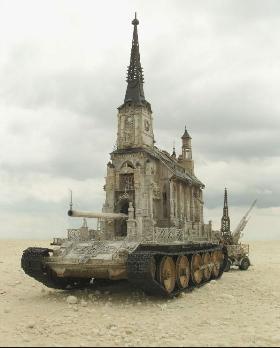
This series began some years ago (2009) to point out what is becoming, more and more as time goes on, news that is moving from the back pages toward the front pages of newspapers (Economic War Of The Pacific, 2, 3, 4, 5).
Today is what some call a "sacred" time when "we" intensify a focus on what "we" consider to be the supreme dynamics that produce what "we" call heroes and perhaps sheroes as "we" peruse history and herstory.
Yes, as "we" peruse events that took place during the many times "we" who are now of "Phase 27" (explained later) "lost it" ... along with the meaning of what that "it" was that "we" lost.
"The deepening of the economic alliance between Russia and China will be high on the agenda as President Xi Jinping meets Russian President Vladimir Putin in Moscow on Wednesday amid their mutual estranged relations with the United States."
(Politico).
"Destroying arms control treaties is 'unacceptable,' Russian President Vladimir Putin said Wednesday during a bilateral meeting with Chinese President Xi Jinping at the Kremlin.
During the visit, which was aimed at cementing economic ties between the two countries amid China's heated trade war with the United States, Putin thanked Xi for helping their countries achieve a trade turnover of more than $100 billion a year. He added that Russian-Chinese relations have reached an 'unprecedented level'." (CNN)
"Chinese President Xi Jinping has described Russia's Vladimir Putin as his 'best friend' during a three-day visit to Moscow focusing on trade and relations between the two countries. The visit comes as China-US relations have soured over a bitter trade war. Russia had decided on a pivot to the east years ago after ties worsened with the West over the Ukraine conflict. The two sides have signed a package of trade deals and Mr Xi also unveiled two pandas for the Moscow Zoo. The Chinese president arrived on Wednesday and later gave a press conference where he said he had a 'deep personal friendship' with his Russian counterpart. 'In the past six years, we have met nearly 30 times. Russia is the country that I have visited the most times, and President Putin is my best friend and colleague,' Mr Xi said. Mr Putin echoed the praise saying he was 'pleased to say that Russian-Chinese relations have reached an unprecedented level. It is a global partnership and strategic cooperation.'" (BBC)
The lyrics of an "anti-war song" come to mind, a song which illustrates that things have not changed much since it was written:
"There's battle lines being drawn
Nobody's right if everybody's wrong
Young people speaking their minds
Getting so much resistance from behind"
"In the Study Toynbee examined the rise and fall of 26 civilizations in the course of human history, and he concluded that they rose by responding successfully to challenges under the leadership of creative minorities composed of elite leaders. Civilizations declined when their leaders stopped responding creatively, and the civilizations then sank owing to the sins of nationalism, militarism, and the tyranny of a despotic minority."
(Encyclopedia Britannica, emphasis added). Adding a one to the previous 26, we calculate that we are at Phase 27, but where is that at (You Are Here)?
Unfortunately, along withthe greatest generationwhich has already done all it can do now, "we"(Phase 27)are the only members ofthe group of 27 civilizations that have the ultimate power to stop it all.
By "stop it all" I mean stop life on Earth as we know it with a nuclear war and/or global warming induced climate change, either of which can eradicate "life's habitat" on this planet.
II. Foreground
The future is closer to us than the past is, i.e., the future is the foreground.
But, for some reason or lack thereof, "our cognition" lies to us and says that the foreground is further away than the background is.
III. Closing Conversation
Once upon a time in the Matrix:
"What is your background sir," asks the interviewer.
"I would rather contemplate my foreground sir," replies the interviewee.
The essence or gravamen of this series is mentioned in the Preamble to the U.S. Constitution where it gives a general description of the general direction the founders were going.
I am talking about when they wrote that the general purpose of U.S. Constitution was to "secure the Blessings of Liberty to ourselves and our Posterity" (Preamble, emphasis added).
In the first post of this series the focus was on recent government events that legislated the opposite of that sentiment, i.e., robbing our Posterity.
II. A How To
We might note that doing that requires endeavors of the "how to" kind.
Sometimes the founders used a "not how to" so as to shine light on how to do the dynamics of the Constitution:
"Of all the enemies to public liberty war is, perhaps, the most to be dreaded, because it comprises and develops the germ of every other. War is the parent of armies; from these proceed debts and taxes; and armies, and debts, and taxes are the known instruments for bringing the many under the domination of the few. In war, too, the discretionary power of the Executive is extended; its influence in dealing out offices, honors, and emoluments is multiplied: and all the means of seducing the minds, are added to those of subduing the force, of the people. The same malignant aspect in republicanism may be traced in the inequality of fortunes, and the opportunities of fraud, growing out of a state of war, and in the degeneracy of manners and of morals, engendered by both. No nation could preserve its freedom in the midst of continual warfare. Those truths are well established."
(James Madison, emphasis added). In other words, if we want to steal from our posterity we will become something that is not good for them or us:
History told us this was going to happen:
But always TCS is primarily the population segment diagnosed as a despotic minority which the once most-often-quoted historian, Toynbee, fingered as one of the members of the trinity of extinction that he found in all civilizations that were about to become very successful at becoming extinct:
That something is the dementia that produces and ends up in suicide:
"In other words, a society does not ever die 'from natural causes', but always dies from suicide or murder --- and nearly always from the former, as this chapter has shown."
(A Study of History, by Arnold J. Toynbee). There is no cure for the final symptom of that group dementia, there is only prevention by way of avoiding it altogether in the first place.
The components of that group dementia were pointed out in an encyclopedia piece concerning that historian quoted above:
"In the Study Toynbee examined the rise and fall of 26 civilizations in the course of human history, and he concluded that they rose by responding successfully to challenges under the leadership of creative minorities composed of elite leaders. Civilizations declined when their leaders stopped responding creatively, and the civilizations then sank owing to the sins of nationalism, militarism, and the tyranny of a despotic minority. Unlike Spengler in his The Decline of the West, Toynbee did not regard the death of a civilization as inevitable, for it may or may not continue to respond to successive challenges. Unlike Karl Marx, he saw history as shaped by spiritual, not economic forces" ...
(Encyclopedia Britannica, emphasis added). The show stopper, in terms of remedy, in this type of group dementia is that it is a contagious dementia.
(When You Are Governed By Psychopaths - 8). Cruelty is a or the major essence of tyranny, so we can easily see "nationalism, militarism, and the tyranny of a despotic minority" at work in our culture today.
III. Militarism on Steroids
The current administration is disintegrating treaties that have been good for us and our Posterity:
"Consider it a marriage made in hell. Start with the groom, Donald Trump, the man who once wondered why in the world we make nuclear weapons if we can’t use them; who wouldn’t rule out using nukes, even in Europe; who insisted that a president should be “unpredictable” on the subject; who suggested that it might not be “a bad thing for us” if Saudi Arabia, Japan, and South Korea all became nuclear powers; who threatened North Korea with “fire and fury like the world has never seen” before he became a chummy correspondent with its dictator; and who called for a nearly 10-fold increase in the U.S. nuclear arsenal (among many other, often contradictory, comments he’s made on nuclear matters). ...
Last month, the National Nuclear Security Administration (formerly the Atomic Energy Commission) announced that the first of a new generation of strategic nuclear weapons had rolled off the assembly line at its Pantex nuclear weapons plant in the panhandle of Texas. That warhead, the W76-2, is designed to be fitted to a submarine-launched Trident missile, a weapon with a range of more than 7,500 miles. By September, an undisclosed number of warheads will be delivered to the Navy for deployment."
"The War Department existed from August 7, 1789[1] until September 18, 1947, when it split into Department of the Army and Department of the Air Force and joined the Department of the Navy as part of the new joint National Military Establishment (NME), renamed the United States Department of Defense in 1949."
The simple argument supporting that declaration is that he is only one person.
He is an individual who is a member of a group of about 62,984,825 people who, in varying degrees (0-100), have the same group dementia.
One thing that has happened to most civilizations is something that has been fatal to each and every one of them.
That something is the dementia that produces and ends up in 'suicide':
"In other words, a society does not ever die 'from natural causes', but always dies from suicide or murder --- and nearly always from the former, as this chapter has shown."
(A Study of History, by Arnold J. Toynbee). There is no cure for the final symptom of that group dementia (there is only prevention by way of avoiding it altogether in the first place).
The components of that group dementia were pointed out in an encyclopedia article concerning the historian quoted above:
"In the Study Toynbee examined the rise and fall of 26 civilizations in the course of human history, and he concluded that they rose by responding successfully to challenges under the leadership of creative minorities composed of elite leaders. Civilizations declined when their leaders stopped responding creatively, and the civilizations then sank owing to the sins of nationalism, militarism, and the tyranny of a despotic minority. Unlike Spengler in his The Decline of the West, Toynbee did not regard the death of a civilization as inevitable, for it may or may not continue to respond to successive challenges. Unlike Karl Marx, he saw history as shaped by spiritual, not economic forces" ...
(Encyclopedia Britannica, emphasis added). The show stopper (in terms of remedy, in this type of group dementia) is that it is a contagious dementia.
Group dynamics, in this context, are contagions to those who become ideological members of a demented group within a society.
Applying that to current society, we can easily recognize the rampant nationalism and militarism in our culture.
Focusing on the third factor ("tyranny of a despotic minority") tends to be much more difficult.
So here are the numbers concerning the minority we are talking about:
Clinton
65,853,516
48.18%
Trump
62,984,825
46.09%
(Federal Election Commission). A minority consisting of some 62,984,825 people voted for President Trump (but it was a smaller subgroup within that group who cast the 304 electoral votes that actually won the election for him).
The 62,984,825 voters are a minority, and the 65,853,516 are a majority by definition (a slim 2.09% majority).
Moving on to 'despotic,' we find that in that violent insurrection oriented group sense, it is associated with despotism:
... societies which limit respect and power to specific groups have also been called despotic.
(Wikipedia). There need not be a dictator or other autocratic individual in order to meet Toynbee's description set forth in his study, especially in the sense of the description "the tyranny of a despotic minority."
In this sense, a minority means a group composed of a population less than the majority of a society (but wielding substantial directional influence).
Note that this would not be possible in the United States if it was a democracy rather than a constitutional republic with an Electoral College that can elect presidents without a majority popular vote (as in the 2016 election of Donald Trump).
To fit into the Toynbee description, all that is needed is that the group be despotic in nature, which is to be 'authoritarian' (a synonym).
This type of authoritarian despotism requires two fundamental characteristics:
Authoritarianism is something authoritarian followers and authoritarian leaders cook up between themselves. It happens when the followers submit too much to the leaders, trust them too much, and give them too much leeway to do whatever they want -- which often is something undemocratic, tyrannical and brutal. In my day, authoritarian fascist and authoritarian communist dictatorships posed the biggest threats to democracies, and eventually lost to them in wars both hot and cold. But authoritarianism itself has not disappeared, and I'm going to present the case in this book that the greatest threat to American democracy today arises from a militant authoritarianism that has become a cancer upon the nation.
(The Authoritarians, book by Bob Altemeyer, Associate Professor, Department of Psychology, University of Manitoba, Winnipeg, Canada, PDF). Put those two together (leaders and followers) in a group with despotic ideology and we have a structure matching and composing a despotic group of the type that historian Toynbee wrote about.
But, in this case the despotism is "soft despotism" to wit:
"Soft despotism is a term coined by Alexis de Tocqueville describing the state into which a country overrun by "a network of small complicated rules" might degrade. Soft despotism is different from despotism (also called 'hard despotism') in the sense that it is not obvious to the people. Soft despotism gives people the illusion that they are in control, when in fact they have very little influence over their government. Soft despotism breeds fear, uncertainty, and doubt in the general populace. Alexis de Tocqueville observed that this trend was avoided in America only by the "habits of the heart" of its 19th-century populace."
(Soft Despotism, Wikipedia). The way the despotism is maintained by a minority has been explained by "the father of spin" (The Ways of Bernays).
III. The Current Soft Despotism
Is Hardening Into Tribalism
The concept of tribalism is probably easier for us to understand, because it has been engineered to fruition in our time:
"But then we don’t really have to wonder what it’s like to live in a tribal society anymore, do we? Because we already do. Over the past couple of decades in America, the enduring, complicated divides of ideology, geography, party, class, religion, and race have mutated into something deeper, simpler to map, and therefore much more ominous. I don’t just mean the rise of political polarization (although that’s how it often expresses itself), nor the rise of political violence (the domestic terrorism of the late 1960s and ’70s was far worse), nor even this country’s ancient black-white racial conflict (though its potency endures). I mean a new and compounding combination of all these differences into two coherent tribes, eerily balanced in political power, fighting not just to advance their own side but to provoke, condemn, and defeat the other."
(America Wasn’t Built for Humans). The group psychology at work forming our minds and thoughts when tribalism prevails is enmity towards "the other."
Recent scientific papers have pointed out that our culture, and in some cases our subculture, is "remodeling" our brains all the time:
"Beyond such internal mechanisms of variation, environment-driven plasticity lends yet another layer of complexity to the brain. The brain is capable of remarkable remodeling in response to experience. Signals originating from the environment can cause both widespread and localized adaptations. At the level of individual cells, structure and function are continually changing with the environment in a dance of lifelong brain plasticity, and some experiences, such as stress or physical exercise, affect the growth, survival, and fate of newborn neurons in neurogenic regions of the brain. ... Traditionally, cells are defined by the tissue to which they belong as well as their particular functional role or morphology. This classification represents a developmental trajectory that begins early in embryogenesis and is hardwired into each cell. But other differences among cells are more subtle. Multi-dimensional analyses of gene expression and other metrics have revealed remarkable heterogeneity among cells of the same traditional “type.” Cells exist in different degrees of maturation, activation,plasticity, and morphology. Once we begin to consider all of the subtle cell-to-cell variations, it becomes clear that the number of cell types is much greater than ever imagined. In fact, it may be more appropriate to place some cells along a continuum rather than into categories at all. ... Brain cells in particular may be as unique as the people to which they belong. This genetic, molecular, and morphological diversity of the brain leads to functional variation that is likely necessary for the higher-order cognitive processes that are unique to humans. Such mosaicism may have a dark side, however. Although neuronal diversification is normal, it is possible that there is an optimal extent of diversity for brain function and that anything outside those bounds—too low or too high—may be pathological. For example, if neurons fail to function optimally in their particular role or environment, deficits could arise. Similarly, if neurons diversify and become too specialized to a given role, they may lose the plasticity required to change and function normally within a larger circuit. As researchers continue to probe the enormous complexity of the brain at the single-cell level, they will likely begin to uncover the answers to these questions—as well as those we haven’t even thought to ask yet."
(Hypothesis: The Cultural Amygdala - 5). We know more about some of those dynamics than those previous civilizations did, civilizations that went down by "suicide" (self-destruction).
Will that superior scientific knowledge we have be sufficient to make us aware of ways to avoid the suicidal fate that engulfed previous groups (which we call "civilizations") recorded in our written history?
Could anyone be like one famous American? (who said and wrote some radical things, such as: “The end of the human race will be that it will eventually die of civilization.” - Ralph Waldo Emerson)
I will offer one such person, even though there are many, who fits the bill of saying radical things about civilization:
"In other words, a society does not ever die 'from natural causes', but always dies from suicide or murder --- and nearly always from the former, as this chapter has shown."
(A Study of History, by Arnold J. Toynbee). In Toynbee's mind, what was it that causes that widespread process of the suicide of civilizations?
The fellows of his "homeland" put it like this:
"In the Study Toynbee examined the rise and fall of 26 civilizations in the course of human history, and he concluded that they rose by responding successfully to challenges under the leadership of creative minorities composed of elite leaders. Civilizations declined when their leaders stopped responding creatively, and the civilizations then sank owing to the sins of nationalism, militarism, and the tyranny of a despotic minority. Unlike Spengler in his The Decline of the West, Toynbee did not regard the death of a civilization as inevitable, for it may or may not continue to respond to successive challenges. Unlike Karl Marx, he saw history as shaped by spiritual, not economic forces."
(Encyclopedia Britannica, emphasis added). Have you read about any past world wars associated with that trinity ... or similar talk of a possible coming war?
That trinity of "nationalism," "militarism" and "a tyrannical despotic minority" is the essence of a unification of sycophants, which I warned about in a recent post (Beware of the Sycophant Epidemic).
It is clear that the demolition of the sound mind of a culture, a civilization, is something that is perpetual (Stockholm Syndrome On Steroids, 2).
A classic example for our time was presented in "Hypothesis: The Cultural Amygdala - 2" discussing the documentary about Anwar Congo and a nation that had descended into a sycophantic group.
In a recent post I provided a video featuring a presentation at MIT by Prof. Dr. Noam Chomsky.
It covered the reasons behind the doomsday clock having been moved from seven minutes until "midnight" (a.k.a. "lights out for civilization") to 2.5 minutes until midnight.
The actors "in that movie" are official anti-social-behavior power-centers that surprisingly mimic the characteristics of the demise of previous civilizations:
In other words, a society does not ever die 'from natural causes', but always dies from suicide or murder --- and nearly always from the former, as this chapter has shown."
(A Study of History, by Arnold J. Toynbee). Once the most-oft-quoted historian, Dr. Toynbee discovered a pathological behavior often repeated in societies, including the largest society, civilization itself.
Those three areas (military, oil, media) are the center of the origin of the current suicidal tendencies, because the military has the nukes, big oil has the other "nuclear option" (climate change), the media have the power of deceit, so, together they comprise the complex MOMCOM.
One of the reasons this suicidal behavior has not been stopped by western societies (by culturally evolving beyond the genetic dispositions of suicidal civilizations past), is primarily the power of propaganda hidden in plain sight:
THE conscious and intelligent manipulation of the organized habits and opinions of the masses is an important element in democratic society. Those who manipulate this unseen mechanism of society constitute an invisible government which is the true ruling power of our country. We are governed, our minds are molded, our tastes formed, our ideas suggested, largely by men we have never heard of. This is a logical result of the way in which our democratic society is organized. Vast numbers of human beings must cooperate in this manner if they are to live together as a smoothly functioning society.
Our invisible governors are, in many cases, unaware of the identity of their fellow members in the inner cabinet.
They govern us by their qualities of natural leadership, their ability to supply needed ideas and by their key position in the social structure. Whatever attitude one chooses to take toward this condition, it remains a fact that in almost every act of our daily lives, whether in the sphere of politics or business, in our social conduct or our ethical thinking, we are dominated by the relatively small number of persons — a trifling fraction of our hundred and twenty [now 320] million — who understand the mental processes and social patterns of the masses. It is they who pull the wires which control the public mind, who harness old social forces and contrive new ways to bind and guide the world.
...
It is the purpose of this book to explain the structure of the mechanism which controls the public mind, and to tell how it is manipulated by the special pleader who seeks to create public acceptance for a particular idea or commodity. It will attempt at the same time to find the due place in the modern democratic scheme for this new propaganda and to suggest its gradually evolving code of ethics and practice.
By definition we can't make sense of insanity, nor conversely demonstrate insanity to be sensible.
Yet, there are vast industries that have been trying to do just that for about a century in the U.S.eh? (The Deceit Business).
They had to give up on that ultimate difficulty, so they chose to call their mixing up of the 'unmixable' by the name of "pragmatism" rather than calling it what it really is.
The trance-makers are so into their own trance (Bernays Trance) that their once-carefully-crafted impositions have now morphed to the point that they are doing it now without using those two words (sanity, insanity) in any reasonable context (at times even swapping the two words surreptitiously along the way).
The predicament boils down to two ways (Trance II, III) to destroy civilization, which includes the human species:
As we are all surely aware, we now face the most ominous decisions in human history. There are many problems that must be addressed, but two are overwhelming in their significance: environmental destruction and nuclear war. For the first time in history, we face the possibility of destroying the prospects for decent existence -- and not in the distant future. For this reason alone, it is imperative to sweep away the ideological clouds and face honestly and realistically the question of how policy decisions are made, and what we can do to alter them before it is too late.
For the remainder of this post, let's look at the two "what could go wrong" trances we face at the fork in the road ahead.
III. What Could Go Wrong
Yes, even at those times when they were asking "what could go wrong" they would stumble, somewhere along the way, into Murphy's Law ("Anything that can go wrong, will go wrong").
But once that law was discovered it was quickly abandoned for a more "pragmatic" policy:
The fall of the Berlin Wall in October 1989 abruptly ended one historical era and inaugurated another. So, too, did the outcome of last year’s U.S. presidential election. What are we to make of the interval between those two watershed moments? Answering that question is essential to understanding how Donald Trump became president and where his ascendency leaves us.
Hardly had this period commenced before observers fell into the habit of referring to it as the “post-Cold War” era. Now that it’s over, a more descriptive name might be in order. My suggestion: America’s Age of Great Expectations.
Forgive and Forget
The end of the Cold War caught the United States completely by surprise. During the 1980s, even with Mikhail Gorbachev running the Kremlin, few in Washington questioned the prevailing conviction that the Soviet-American rivalry was and would remain a defining feature of international politics more or less in perpetuity. Indeed, endorsing such an assumption was among the prerequisites for gaining entrée to official circles. Virtually no one in the American establishment gave serious thought to the here-today, gone-tomorrow possibility that the Soviet threat, the Soviet empire, and the Soviet Union itself might someday vanish. Washington had plans aplenty for what to do should a Third World War erupt, but none for what to do if the prospect of such a climactic conflict simply disappeared.
Still, without missing a beat, when the Berlin Wall fell and two years later the Soviet Union imploded, leading members of that establishment wasted no time in explaining the implications of developments they had totally failed to anticipate. With something close to unanimity, politicians and policy-oriented intellectuals interpreted the unification of Berlin and the ensuing collapse of communism as an all-American victory of cosmic proportions. “We” had won, “they” had lost -- with that outcome vindicating everything the United States represented as the archetype of freedom.
From within the confines of that establishment, one rising young intellectual audaciously suggested that the “end of history” itself might be at hand, with the “sole superpower” left standing now perfectly positioned to determine the future of all humankind. In Washington, various powers-that-be considered this hypothesis and concluded that it sounded just about right. The future took on the appearance of a blank slate upon which Destiny itself was inviting Americans to inscribe their intentions.
American elites might, of course, have assigned a far different, less celebratory meaning to the passing of the Cold War. They might have seen the outcome as a moment that called for regret, repentance, and making amends.
After all, the competition between the United States and the Soviet Union, or more broadly between what was then called the Free World and the Communist bloc, had yielded a host of baleful effects. An arms race between two superpowers had created monstrous nuclear arsenals and, on multiple occasions, brought the planet precariously close to Armageddon. Two singularly inglorious wars had claimed the lives of many tens of thousands of American soldiers and literally millions of Asians. One, on the Korean peninsula, had ended in an unsatisfactory draw; the other, in Southeast Asia, in catastrophic defeat. Proxy fights in Asia, Africa, Latin America, and the Middle East killed so many more and laid waste to whole countries. Cold War obsessions led Washington to overthrow democratic governments, connive in assassination, make common cause with corrupt dictators, and turn a blind eye to genocidal violence. On the home front, hysteria compromised civil liberties and fostered a sprawling, intrusive, and unaccountable national security apparatus. Meanwhile, the military-industrial complex and its beneficiaries conspired to spend vast sums on weapons purchases that somehow never seemed adequate to the putative dangers at hand.
Rather than reflecting on such somber and sordid matters, however, the American political establishment together with ambitious members of the country’s intelligentsia found it so much more expedient simply to move on. As they saw it, the annus mirabilis of 1989 wiped away the sins of former years. Eager to make a fresh start, Washington granted itself a plenary indulgence. After all, why contemplate past unpleasantness when a future so stunningly rich in promise now beckoned?
(Tom Dispatch, "How We Got Here"). As it turns out then, even 'here' turns out to be just another word for a 'nothing left to lose' freedom trance (The Matriarch of The Matrix).
IV. The YAH Trance
How we got to where ever we are seems to be less pragmatic and less probable, especially if we climb up to peer over the trance walls, and are able to look deep enough into whatever 'here' we have arrived at.
As it turns out, 'here' is not here (You Are Here).
Where we have ended up is where "the resistance" is a struggle for our very lives, rather than a struggle to bring peace and prosperity to ourselves and others (the 'here' we were told we were going to).
But more than that, the place where the powers that be are located, and where resistance to them is located, is really not 'here'.
V. Conclusion
The video below shows that various governments are performing their duties as if they live on two different planets.
That inexorably leads to some countries being "pragmatic" in a way that is diametrically opposite to another country's "pragmatism," even as they claim to be 'here'.
Some European nations are hard at work on projects to protect their coasts, while in Florida, North Carolina, and Wisconsin, "climate change" is being removed from official public discourse.
Yes, the data that are being interpreted by the consensus of scientists are being heeded with gasps by one official group, while being denied by another official group.
"Now, brothers and sisters, about times and dates we do not need to write to you, for you know very well that the day of the Lord will come like a thief in the night. While people are saying, “Peace and safety,” destruction will come on them suddenly, as labor pains on a pregnant woman, and they will not escape. But you, brothers and sisters, are not in darkness so that this day should surprise you like a thief. You are all children of the light and children of the day. We do not belong to the night or to the darkness. So then, let us not be like others, who are asleep, but let us be awake and sober. For those who sleep, sleep at night, and those who get drunk, get drunk at night. But since we belong to the day, let us be sober, putting on faith and love as a breastplate, and the hope of salvation as a helmet. For God did not appoint us to suffer wrath but to receive salvation through our Lord Jesus Christ. He died for us so that, whether we are awake or asleep, we may live together with him. Therefore encourage one another and build each other up, just as in fact you are doing."
(I Thess. 5; by Paul, Silvanus, and Timothy). Then they urge this:
The Lord is a warrior and in Revelation 19 it says when he comes back, he's coming back as what? A warrior.A mighty warrior leading a mighty army, riding a white horse with a blood-stained white robe ... I believe that blood on that robe is the blood of his enemies 'cause he's coming back as a warrior carrying a sword.
And I believe now - I've checked this out - I believe that sword he'll be
"Jesus is coming with an AR-15" - U.S. General
carrying when he comes back is an AR-15.
Now I want you to think about this: where did the Second Amendment come from? ... From the Founding Fathers, it's in the Constitution. Well, yeah, I know that. But where did the whole concept come from? It came from Jesus when he said to his disciples 'now, if you don't have a sword, sell your cloak and buy one.'
I know, everybody says that was a metaphor. IT WAS NOT A METAPHOR! He was saying in building my kingdom, you're going to have to fight at times. You won't build my kingdom with a sword, but you're going to have to defend yourself. And that was the beginning of the Second Amendment, that's where the whole thing came from. I can't prove that historically and David [Barton] will counsel me when this is over, but I know that's where it came from.
And the sword today is an AR-15, so if you don't have one, go get one. You're supposed to have one. It's biblical.
"The United States is on track to spend more than $600 billion on the military this year -- more, that is, than was spent at the height of President Ronald Reagan’s Cold War military buildup, and more than the military budgets of at least the next seven nations in the world combined. And keep in mind that that’s just a partial total. As an analysis by the Straus Military Reform Project has shown, if we count related activities like homeland security, veterans' affairs, nuclear warhead production at the Department of Energy, military aid to other countries, and interest on the military-related national debt, that figure reaches a cool $1 trillion.
The more that’s spent on “defense,” however, the less the Pentagon wants us to know about how those mountains of money are actually being used. As the only major federal agency that can’t pass an audit, the Department of Defense (DoD) is the poster child for irresponsible budgeting.
It’s not just that its books don’t add up, however. The DoD is taking active measures to disguise how it is spending the hundreds of billions of taxpayer dollars it receives every year -- from using the separate “war budget” as a slush fund to pay for pet projects that have nothing to do with fighting wars to keeping the cost of its new nuclear bomber a secret. Add in dozens of other secret projects hidden in the department’s budget and the Pentagon’s poorly documented military aid programs, and it’s clear that the DoD believes it has something to hide."
I think that the answer to his question is that some percentage of Americans are hooked on war (warmongers, "Dick Cheney, John McCain").
Others romanticize war (the "war is peace", "my warrior hero" trance).
Or the profits made from war by those who control the weapons and materiel making corporations ("war profiteers, Daddy Warbucks").
Yet, another percentage of Americans have heeded the words of one of the founders; specifically the one who wrote the "Bill of Rights," and the one who is called "The Father of the Constitution."
His words were pointed out in a Toxins of Power Blog post in November of 2009:
An answer from the sages in our past who we are very fortunate to have had, but sages which we have ignored to our great demise in recent times.
An answer that seems today to be totally and completely at odds with the conventional wisdom-hype and propaganda, which is composed of the glorification of the greatest source of the toxins of power.
Our founders were well aware of the question and the answer hundreds of years ago.
They spoke the answer with unmistakable words and with certain clarity:
Of all the enemies to public libertywar is, perhaps, the most to be dreaded, because it comprises and developsthe germof every other. War is the parent of armies; from these proceed debts and taxes; and armies, and debts, and taxes are the known instruments for bringing the many under the domination of the few. In war, too, the discretionary power of the Executive is extended; its influence in dealing out offices, honors, and emoluments is multiplied: and all the means of seducing the minds, are added to those of subduing the force, of the people. The same malignant aspect in republicanism may be traced in the inequality of fortunes, and the opportunities of fraud, growing out of a state of war, and in the degeneracy of manners and of morals, engendered by both. No nation could preserve its freedom in the midst of continualwarfare. Those truths are well established.
(James Madison, emphasis added). The visionary who made that statement was the 4th President of the United States, Bill of Rights author, Congressman, Cabinet Member, and who was also called the "Father of the U.S. Constitution".
The above quote is from his "Political Observations," April 20, 1795, in Letters and Other Writings of James Madison, Volume IV, page 491-492.
Notice, in the quote above, how Madison equated or associated the toxins of power with disease epidemic concepts, saying that the war toxin "develops the germ of every other" anti-freedom toxin.
(The Greatest Source Of Power Toxins?). One would be remiss to not notice how much the empire today is utterly infected with the war germ we were warned not to catch.
Other sources of vision saw what would happen if we stumbled into the emotional quicksand of the madness of our more recent leaders:
There were Senators like Byrd, and House of Representative members like Pete Stark, in the year 2002, who had vision.
But vision was discounted as a kooky thing, and those that had vision were discounted by the dementia congress was suffering from then, and still is.
Where there is no vision the people perish, and the leaders supplant vision with "excuses" and whining.
The Honorable Pete Stark said this about the "AUMF Resolution" before the Iraq disaster happened:
(The Stark Truth). Even some of those who one would not expect to be as politically saavy, the comedians, also got it (The Onion, 2003).
Oil-Qaeda is the largest psychopathic-meme-complex in history, exhibiting all of the maladjusted behavioural characteristics of individual psychopaths, but doing so in concert as a group:
"In 1977, [Oil-Qaeda] scientists began to discuss the threat of disruptive climate change as a direct result of the burning of fossil fuels. The [private empire] launched cutting-edge research into the effects that carbon dioxide emissions would have on the climate. Based on that research, [Oil-Qaeda] scientists warned [Oil-Qaeda] leadership that carbon dioxide emissions would warm the planet, with potentially catastrophic repercussions. Rather than accept what their own scientists were saying, top executives at [Oil-Qaeda] started a massive campaign of disinformation. By 1997, the chief executive of [Oil-Qaeda], Lee Raymond, was publicly claiming that the connection between human activities and climate change was inconclusive and uncertain. Forbes magazine wrote that Raymond “used his executive chair as a platform for espousing his disbelief in global warming.”
[Oil-Qaeda] created advertisements that contradicted its own research on global warming. The [private empire] funded the Global Climate Coalition, an organization of [criminally conspiring] companies dedicated to derailing government efforts to slash emissions from fossil fuels.
[Oil-Qaeda] also spent millions of dollars in the form of political campaign donations, lobbying fees and public relations strategies to discredit climate science and disrupt any forceful state or federal action to cut carbon dioxide emissions. The [private empire] also supported think tanks that attempted to discredit climate science and scientists. In 2001, [Oil-Qaeda] lobbyists helped convince President George W. Bush to pull out of the Kyoto Protocol. By 2006, the [private empire] was funneling tens of millions of dollars to at least 43 organizations dedicated to discrediting climate science. [Oil-Qaeda] opposed historic climate and energy legislation such as the American Clean Energy and Security Act, also known as the Waxman-Markey Bill. The measure died in the Senate in 2009."
It does not matter which way we look at it, the bottom line is that Oil-Qaeda, through its deception, is the force of cognition that has led civilization to the brink (Civilization Is Now On Suicide Watch, 2, 3, 4, 5, 6, 7, 8).
Regular readers know that Oil-Qaeda likes to remind us that it is "not an American company" (MOMCOM: The Private Parts, 2, 3, 4, 5).
I like to remind Oil-Qaeda that where it makes its bed does not matter, what matters is the will or lack thereof of officials charged with prosecuting crimes against the United States (Follow The Immunity, 2, 3).
The corruption of officials has been the mainstay of Oil-Qaeda, and still is to this very day.
Until that changes, extinction gets closer each day.
In a recent post Howard Zinn reflects on how he discovered that he was working for an empire rather than for a humanistic culture as he had been educated to believe:
With an occupying army waging war in Iraq and Afghanistan, with military bases and corporate bullying in every part of the world, there is hardly a question any more of the existence of an American Empire. Indeed, the once fervent denials have turned into a boastful, unashamed embrace of the idea. However, the very idea that the United States was an empire did not occur to me until after I finished my work as a bombardier with the Eighth Air Force in the Second World War, and came home. Even as I began to have second thoughts about the purity of the "Good War," even after being horrified by Hiroshima and Nagasaki, even after rethinking my own bombing of towns in Europe, I still did not put all that together in the context of an American "Empire." I was conscious, like everyone, of the British Empire and the other imperial powers of Europe, but the United States was not seen in the same way. When, after the war, I went to college under the G.I. Bill of Rights and took courses in U.S. history, I usually found a chapter in the history texts called "The Age of Imperialism." It invariably referred to the Spanish-American War of 1898 and the conquest of the Philippines that followed. It seemed that American imperialism lasted only a relatively few years. There was no overarching view of U.S. expansion that might lead to the idea of a more far-ranging empire -- or period of "imperialism."
(Empire or Humanity?). His sentiments as one who was a participant in "the good war" resemble another observer and writer who witnessed what he described as a religion tinged trance of sorts:
"The enemy aggressor is always pursuing a course of larceny, murder, rapine and barbarism. We are always moving forward with high mission, a destiny imposed by the Deity to regenerate our victims, while incidentally capturing their markets; to civilise savage and senile and paranoid peoples, while blundering accidentally into their oil wells."
The Oil-Qaeda spirit seems to be the other side of the Madonna-Whore coin in this strange relationship, because of the terrorism being done to the virgin mother "everyone" loves, Mother Nature (Oil-Qaeda: The Indictment).
The situation is suggestive of the notion that an empire can get YAH YAH Alzheimer's disease (You Are Here).
IV. No Cure
Historically, there seems to be no known cure for the Alzheimer's like problem that has now infected "the only virgin" empire:
"In other words, a society does not ever die 'from natural causes', but always dies from suicide or murder --- and nearly always from the former, as this chapter has shown." - A Study of History, by Arnold J. Toynbee
"If Tyranny and Oppression come to this land, it will be in the guise of fighting a foreign enemy." - James Madison
“Experience has shown that even under the best forms of government those entrusted with power have, in time, and by slow operations, perverted it into tyranny.” – Thomas Jefferson
(Quotes Page). The only question we can reasonably ponder, it would seem, is "does anyone get out of this alive?"
The fundamental approach to all social ills in the virgin empire today is that the problems are all financial, economic, and based on not having enough money ever.
The true believers get all Alzheimered up about it, then broadcast this "cure story" like some Kardasian adventure, but without even knowing the type of "economy" they have (American Feudalism, 2, 3, 4, 5, 6, 7, 8, 9, 10, 11).
Probably the only hope is for a social gynaecologist movement to take a look at the (virgin / whore) private parts to determine if it really is a virgin or just a violence-whore (MOMCOM: The Private Parts, 2, 3, 4, 5).